Why Are Custom Challenge Coins Expanding Beyond Military Recognition?
Release time: 2026-08-24
Table of Contents
For decades, challenge coins were strongly associated with military units, service recognition, and organizational identity. That history still matters, but the product is no longer limited to military environments.
Today, organizations are increasingly using custom challenge coins to recognize employees, celebrate milestones, strengthen team identity, and create memorable event merchandise. Recent industry content shows corporate recognition, government organizations, first responders, sports teams, and other groups adopting challenge coins for purposes beyond traditional military use.
The change is not simply about making more coins. It reflects a broader shift toward tangible recognition products that carry a story and remain useful as keepsakes long after an event ends.
Why Are Challenge Coins Moving Into Corporate Recognition?
A certificate can recognize an achievement, but it is easy to file away. A digital award may be visible for a few seconds and then disappear into an inbox.
A physical coin behaves differently.
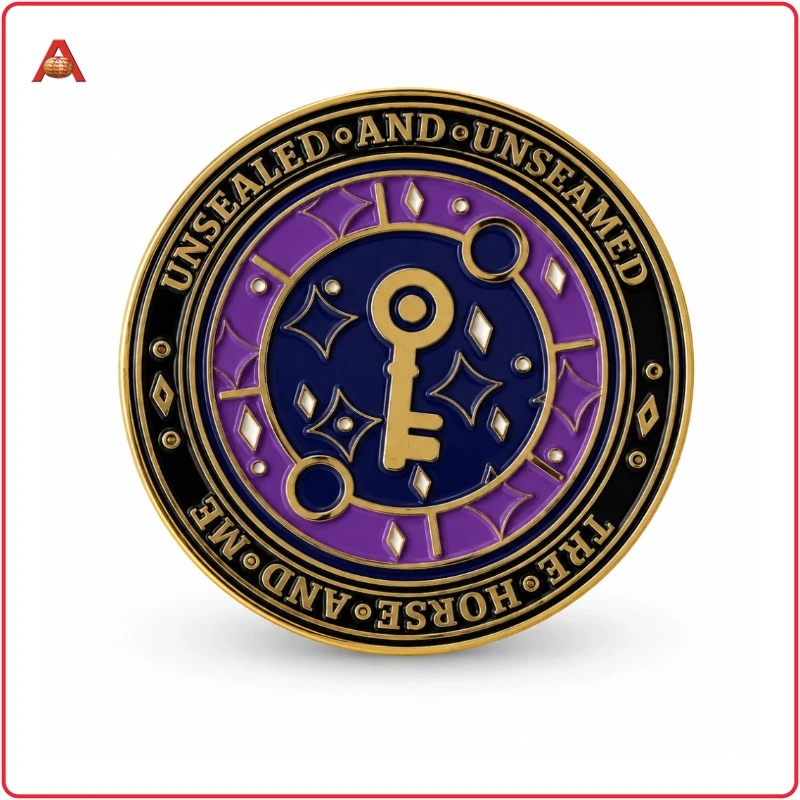
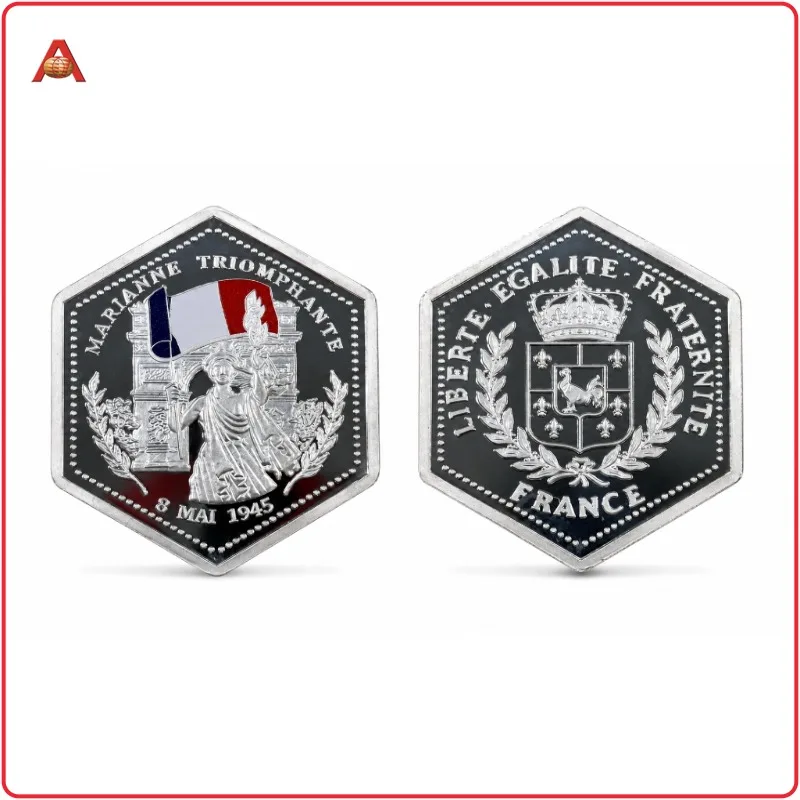
A well-designed challenge coin can represent a specific achievement, milestone, value, team, or relationship. Companies can use it for employee recognition, leadership awards, years-of-service programs, project completion, onboarding, retirement, or corporate anniversaries.
Recent 2026 industry content specifically highlights employee recognition, leadership awards, corporate milestones, sales achievements, onboarding, and team-building as emerging corporate applications for challenge coins.
This makes the coin less like a conventional promotional giveaway and more like a physical recognition asset.
What Makes a Challenge Coin Different From a Standard Promotional Product?
The difference is largely in the meaning attached to the object.
A promotional keychain may primarily communicate a logo. A recognition coin can communicate why the recipient earned it.
That distinction changes how the product should be designed.
| Traditional Promotional Product | Recognition Challenge Coin |
|---|---|
| Primarily brand-focused | Achievement-focused |
| Often distributed broadly | Usually given to selected recipients |
| Emphasis on visibility | Emphasis on meaning |
| Simple logo application | Story, emblem, text and symbolism |
| General marketing use | Recognition and commemorative use |
| Short-term promotional role | Long-term keepsake potential |
For corporate buyers, this means the design brief should start with the recognition objective rather than simply asking for a logo on a coin.
How Should a Corporate Challenge Coin Be Designed?
A strong challenge coin usually needs a clear visual hierarchy.
The front side can communicate the primary identity: company logo, department emblem, campaign symbol, or recognition title.
The reverse can carry supporting information such as:
- Employee name
- Achievement
- Date
- Years of service
- Team or department
- Company values
- Event name
- Serial number
The edge can also become part of the design. Depending on the project, buyers may consider lettering, numbering, rope edges, reeded edges, or other custom treatments.
The goal is not to fill every available surface. A crowded coin can become difficult to read and expensive to manufacture.
A better approach is to determine what the recipient should notice first, second, and third.
Which Manufacturing Process Is Better for Custom Challenge Coins?
The manufacturing method should match the design.
Die-struck coins are well suited to designs where raised and recessed metal details are central to the appearance. They can produce a classic, substantial feel.
Die-cast coins provide greater freedom for three-dimensional forms, unusual contours, recessed areas, and more complex shapes.
Enamel filling introduces color into selected recessed sections. Soft enamel can provide a tactile finish, while hard enamel offers a smoother appearance.
Laser engraving can be useful when the design requires fine text, names, dates, serial numbers, or other variable information.
For projects with premium positioning, buyers may also consider plating combinations and antique finishes to create contrast between raised and recessed areas.
| Design Requirement | Potential Manufacturing Approach |
| Classic raised metal detail | Die Struck |
| Complex 3D geometry | Die Cast |
| Strong color areas | Enamel |
| Fine personalization | Laser Engraving |
| Vintage appearance | Antique Finish |
| Premium contrast | Dual Plating |
| Unusual silhouette | Custom Die / Die Cast |
The right answer depends on the actual artwork, dimensions, quantity, and budget. There is no single manufacturing method that works best for every challenge coin.
Why Is Quality Control Especially Important for Challenge Coins?
Coins contain a surprising amount of detail in a very small physical area.
A slight inconsistency in die depth can affect how a logo reads. Poor plating can reduce the visual contrast between raised and recessed sections. Small text can become illegible if the design is not adjusted for the final coin diameter.
This is why experienced manufacturers review the production artwork before the tooling stage.
For B2B buyers, several points deserve attention:
- Coin diameter and thickness
- Metal base material
- Die-struck or die-cast construction
- Enamel specifications
- Plating finish
- Edge treatment
- Variable engraving requirements
- Individual packaging
- Sample approval
- Final inspection
The larger the order, the more important process consistency becomes.
What Industries Are Using Custom Challenge Coins?
Military organizations remain an important market, but they are no longer the only one.
Current applications include:
- Corporate employee recognition
- Government organizations
- Police and law enforcement
- Firefighter and first responder recognition
- Universities and schools
- Sports teams
- Clubs and associations
- Company anniversaries
- Conferences and events
- Fundraising campaigns
- Collectible merchandise
Industry sources in 2026 are specifically positioning corporate challenge coins around employee achievement, leadership recognition, milestones, onboarding, and company culture.
That expansion creates an opportunity for manufacturers that can adapt the traditional challenge coin format to different audiences without losing its sense of significance.
How Can a Manufacturer Support Large Custom Coin Projects?
For an international buyer, manufacturing capability matters when a project moves beyond a small batch.
A recognition program may require multiple designs for different departments, employee levels, annual milestones, or events. A souvenir program may involve several shapes and finishes. A promotional campaign may combine coins with pins, medals, keychains, or other metal products.
Badge One Factory operates a 50,000-square-meter factory with 13 fully owned workshops and has 43 years of manufacturing experience.
That scale is particularly relevant for buyers looking for a long-term manufacturing partner rather than a one-off production source. Keeping multiple manufacturing processes under one organizational system can help simplify production coordination, quality management, and communication across customized projects.
Final Takeaway
Custom challenge coins are expanding beyond military recognition because the underlying idea—giving someone a tangible symbol of achievement or belonging—works in many organizational settings.
The strongest corporate coins are not simply miniature advertisements. They communicate a specific achievement, relationship, milestone, or shared identity.
For buyers, the most important decision is therefore not just the coin’s shape or finish. It is the combination of purpose, artwork, manufacturing method, material, personalization, and quality control.
For organizations sourcing custom challenge coins, commemorative coins, or custom recognition coins, Badge One Factory brings 43 years of manufacturing experience, a 50,000-square-meter production facility, and 13 fully owned workshops to customized metal product manufacturing.
FAQ
Are challenge coins only used by the military?
No. While military organizations remain strongly associated with challenge coins, modern applications include corporate recognition, government organizations, first responders, sports teams, universities, clubs, and events.
What is the difference between a challenge coin and a commemorative coin?
A challenge coin generally emphasizes organizational identity, membership, achievement, or recognition. A commemorative coin is more commonly created to mark a person, event, anniversary, historical occasion, or milestone. The two can overlap depending on the intended use.
Can a corporate challenge coin include employee names?
Yes. Names, dates, departments, achievement titles, serial numbers, and other variable information can be incorporated through suitable engraving or other personalization methods.
What metal is best for a custom challenge coin?
There is no universal best material. Zinc alloy is often useful for complex cast designs, while brass or bronze can be suitable for classic die-struck appearances. The right choice depends on the artwork, desired weight, finish, quantity, and budget.
How can I make a challenge coin look more premium?
Consider a combination of substantial thickness, precise relief, carefully selected plating, controlled enamel colors, polished raised areas, antique finishes, and high-quality edge treatments. Most importantly, the design should remain readable at the final physical size.